Language Lab Software: Offline or Online - Which is Better for Schools and Colleges?
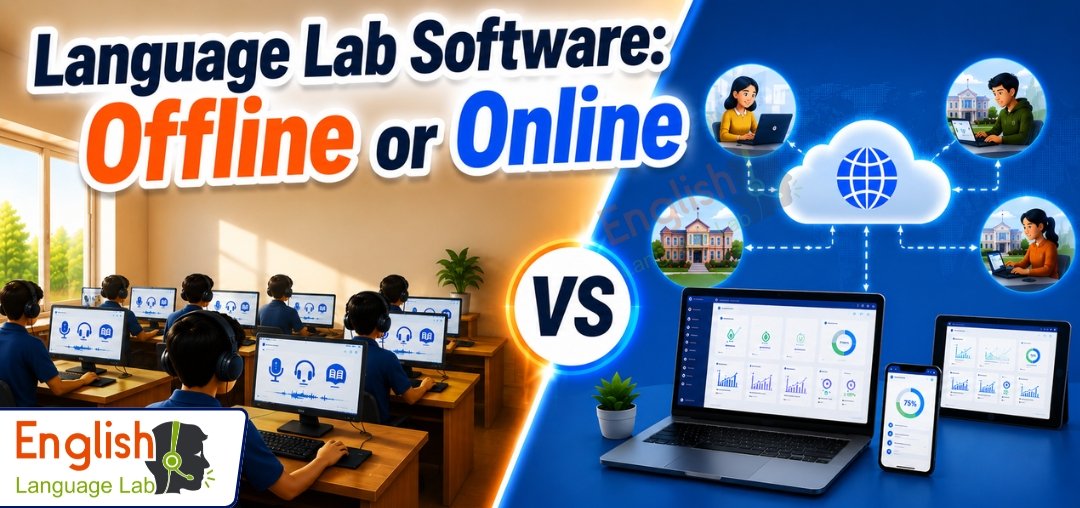
When schools and colleges look for ways to improve student’s English communication skills, one common question arises that is should they choose language lab software offline or online? Both options claim to enhance speaking, listening, reading and writing abilities making the decision challenging for educational institutions. The important factor in determining which way will improve the quality of learning in a real-time classroom environment is based on concrete evidence of successful classroom learning experiences from the two modes of language learning labs.
This blog post explains both ways of learning to improve student’s English language learning outcomes through the establishment of language labs and also provides detailed comparisons of both types of language labs and indicates why offline language labs will likely prove to provide greater student success in Indian schools and colleges than online language labs.
What Is Language Lab Software?
Language lab software is a digital platform used in schools and colleges to teach English communication skills. It covers pronunciation, grammar, vocabulary, listening, speaking and soft skills like group discussions and interview preparation.
It is widely used in:
- Engineering colleges,
- Degree and junior colleges,
- Schools from Class KG to Class X,
- ITI, Polytechnic and skill development institutes.
Language lab software comes in two types: Online (cloud-based) and Offline (locally installed). Both aim to improve English fluency but they work very differently in real classroom conditions.
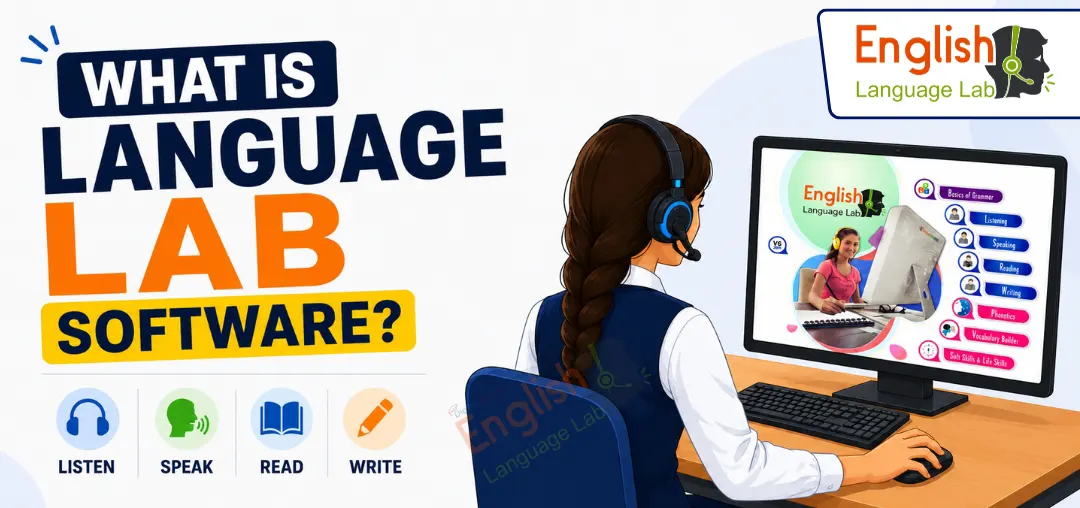
Online Language Lab Software:
Online language lab software is a cloud-based platform that students can access through any browser or device with an internet connection. It offers flexibility to learn anytime and from anywhere. Content is streamed from remote servers, making updates easy and automatic. It works well for self-paced learners and institutions with strong, stable internet. However, it depends entirely on network availability, which can disrupt classroom sessions in areas with poor connectivity.
Advantages of online language lab software:
- Students can access it from any device, anywhere
- No installation is required on individual computers
- Content updates happen automatically
- Works well for self-paced
Disadvantages:
- Requires a stable, high speed internet connection at all times
- Buffering and connectivity issues can disrupt live class sessions
- Annual subscription costs increase over time
- Not reliable in areas with weak or inconsistent internet
Offline Language Lab Software:
Offline language lab software is installed directly on the computers in your school or college lab, with all content stored locally. It works without any internet connection making it reliable regardless of network availability. Digital Teacher English Language Lab is one of India's most trusted offline language lab software used by 7500+ institutions across India.
Students can access lessons, pronunciation exercises, grammar modules and assessments from their individual systems, while teachers monitor progress in real time making it the most reliable choice for institutions that need consistent results every day.
Advantages of offline language lab software:
- Works without any internet connection
- Consistent, smooth performance with no buffering
- Rich audio-visual content stored directly on lab computers
- Aligned with AICTE and CEFR curriculum
- One-time cost model - no recurring annual fees
Disadvantages:
- Requires initial installation and setup
- Content updates are delivered periodically as patches
- Students use it in the lab rather than from home
Why Offline Language Lab Software Wins for Indian Institutions:
Based on feedback from thousands of schools and colleges across India, here is why offline consistently outperforms online for institutional use:
1. No internet dependency:
Internet connectivity in Indian classrooms is still unreliable in many areas. One dropped connection can disrupt an entire class session. Offline software eliminates this risk completely. Digital Teacher English Language Lab is installed directly on your lab computers, so classes run smoothly whether your internet is working or not. There are no buffering delays, no login failures, and no waiting for pages to load. Even in rural and semi-urban areas where broadband is inconsistent, your language lab sessions continue without any interruption, ensuring every student gets the same quality of learning experience every single day.
2. Structured, curriculum-aligned content:
Digital Teacher English Language Lab is built around a structured, progressive curriculum that follows internationally recognized CEFR (Common European Framework of Reference for Languages) guidelines. Our content is not generic or borrowed from global platforms, it is carefully designed keeping Indian students in mind, covering their specific learning challenges and communication needs.
3. Mother Tongue Influence (MTI) reduction:
One of the biggest challenges Indian students face when learning English is the influence of their native language on their pronunciation, sentence structure and speaking patterns. This is known as Mother Tongue Influence (MTI) and it is one of the primary reasons why many students struggle to communicate confidently in English despite years of studying the language.
Our language lab software includes dedicated MTI reduction modules specifically designed for Indian learners. These exercises help students identify where their native language is affecting their English pronunciation and guide them step by step to correct them.
4. Flexible Licensing That Suits Every Institution:
Unlike online platforms that charge monthly or annual subscriptions where costs keep increasing every year, Digital Teacher English Language Lab offers flexible licensing options designed to suit institutions of all sizes and budgets. You can choose a 1 year, 2 years or 5 years license based on your institution's needs and planning cycle. The longer the license period, the better the value you get. This gives institutions full control over their budget while ensuring uninterrupted access to the software for the entire license period and no surprise price hikes, no hidden renewal costs.

Comparison of Benefits: Offline vs Online Language Learning Software:
| Feature | Advantages of Offline Language Lab Software | Advantages of Online Language Lab Software |
|---|---|---|
| Convenience and Flexibility | Online language activities, such as Language laboratory Software and English language lab Software, offer worldwide reach and flexibility, allowing students to take classes at all times. | Offline learning of languages, such as in a traditional language lab, requires physical presence, which has flexibility like online software and easy access. |
| Cost-effectiveness | Online learning software services are generally more cost-effective. | Offline learning software, such as in an English language lab for schools or colleges, is less cost-effective. |
| Teaching /Learning Materials (TLM) | Online platforms include a wide range of learning materials, including AICTE-based language labs and English language tools, which improve the whole experience. | Offline learning makes language easy and fun with rich visuals, animations, and interactive content. It covers around 5000 words across 8 levels, with clear examples to boost vocabulary. Students also learn through expert-led video lessons, debate practice, and voice recording tools for helpful feedback. |
| Technical Services: | Technical issues and limited personal connection might be disadvantages of online learning, although effective English language lab software can help to offset some of these challenges. | Offline learning has no technological limitations, but it depends primarily on face-to-face contact in a language lab. It is compatible with standard PCs and laptops, enabling equal access for all students whatever their digital assets. |
| Engagement and Community: | Because of the limited personal connection, online learning tools may struggle with engagement and community development. | Offline learning software boosts engagement through interactive conversation practice, enhancing real-world communication. It targets pronunciation and oral skills by reducing Mother Tongue Influence (MTI) and closing pronunciation gaps. |
| Growth and Adaptation: | Language laboratory Software supports online instruction, which allows for scalability and customisation to meet the needs of individual learners. | Offline training improves pronunciation and oral skills through listen-and-repeat tasks with model tracks. It also offers detailed reports covering grammar, phonetics, and overall language development. |
| Tracking/Monitoring: | You may measure student progress using tools like Rosetta Stone software. | offline language learning software has no built-in tools! However, it is not suggested because less monitoring at educational institutions reveals the performance of students is high. |
| Social Practice: | Some online platforms provide group and one-on-one instruction to practice language in a social atmosphere, similar to an English language lab. | In a traditional Language lab, offline language learning naturally encourages social practice and practical use. |
| Long-Term Learning: | Some users think that online materials alone may not be sufficient to address long-term learning goals, and they recommend immersive, real-world practice in an English Language Lab for Schools. | Offline learning is thought to improve long-term retention by providing immersive, real-world practice in an English Language Lab for Schools. |
| Internet Accessibility: | When compared to offline language learning software methods, online language learning systems may have trouble delivering consistent learning due to content accessibility issues. | Our English Language Lab Software for Schools and Institutes offers an easy way to improve your knowledge of the English language without requiring an internet connection. |
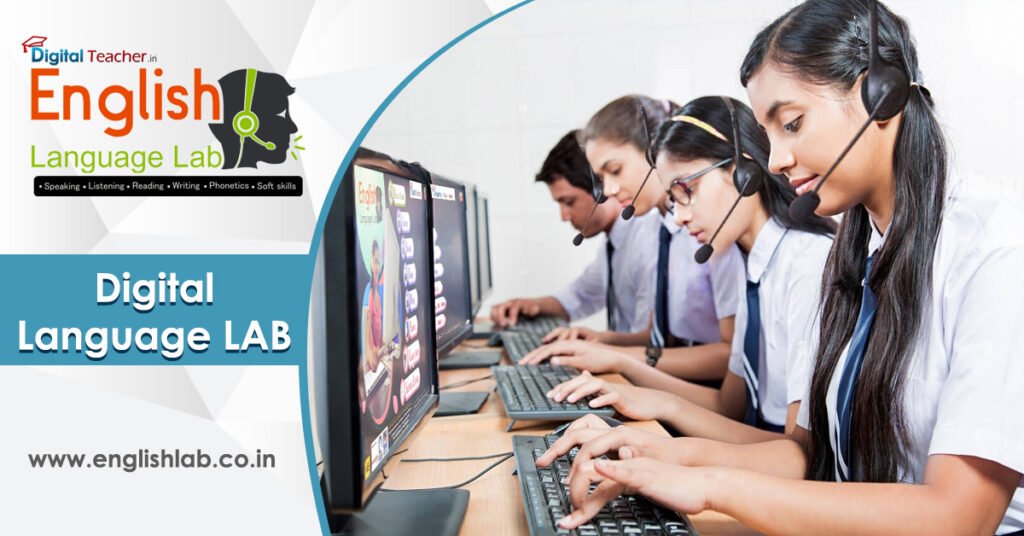
When Does Online Language Learning Make Sense?
Online tools are not without merit. They work well for:
- Individual self-learners studying at home with good internet
- Corporate training across multiple locations
- Supplementary practice alongside an existing offline lab
- Urban institutions with enterprise grade broadband and strong IT support
However, if your institution runs a dedicated language lab and needs guaranteed classroom performance, offline software is the more dependable choice.
Final Thoughts:
If you have read this far, you already know what the right choice is. Offline language lab software and specifically Digital Teacher English Language Lab gives your institution everything it needs to deliver world class English communication training without depending on internet, without recurring cost surprises and without compromise on quality.
Join 7,500+ schools and colleges across India who have already made the switch. See firsthand how CEFR aligned content, MTI reduction modules, real time teacher monitoring and structured progressive learning can transform your student’s English skills from the very first session.
Learn More or Request a Demo
Discover How English Language Lab Builds Real Communication Skills
Website: www.englishlab.co.in
Email: sales@codeandpixels.net
Phone: +91 90000 90702
 |
HARSHITHA AGARWAL Specializes in making complex linguistic concepts accessible and intuitive. By researching real-life language applications, she simplifies grammar and vocabulary into engaging, immersive modules. Her work ensures that the English Lab’s content remains fresh, inclusive, and strictly aligned with international proficiency benchmarks, facilitating a natural transition to English mastery.    |
People Also Ask:
1. What is the difference between offline and online language lab software?
Offline language lab software is installed in your lab computers and works without internet, ensuring uninterrupted classroom sessions. Online software is cloud-based and requires a stable internet connection to access content. For most Indian schools and colleges, offline is the more reliable and practical choice.
2. Does Digital Teacher English Language Lab work without internet?
Yes, completely. Digital Teacher English Language Lab is installed directly in your computers with all content stored locally, no internet is required at any point. This makes it fully reliable even in areas with poor or inconsistent connectivity.
3. What is CEFR and does Digital Teacher follow CEFR guidelines?
CEFR (Common European Framework of Reference for Languages) is the globally recognized standard for language learning, defining proficiency levels from A1 (beginner) to C2 (mastery). Yes, Digital Teacher follows CEFR guidelines ensuring every student progresses in a structured, measurable and internationally recognized way.
4. What is Mother Tongue Influence and how does English Language Lab help reduce it?
Mother Tongue Influence (MTI) is the impact of a student's native language on their English pronunciation and speaking patterns. Our language lab includes dedicated MTI reduction modules with phonetics training, listen and repeat exercises and voice recording tools designed specifically for Indian students.
5. What are the licensing options for Digital Teacher English Language Lab?
Digital Teacher offers flexible licensing options of 1 year, 2 years or 5 years allowing institutions to choose a plan that fits their budget and planning cycle.


