English Language Lab Case Study | Little Flower High School

A real implementation story demonstrating how a dedicated Digital Teacher English Language Lab supports structured English language learning through interactive listening, speaking, reading, writing, grammar, vocabulary and pronunciation activities.
This case study explores about a school that has been using the language lab software for multiple academic years and continues to renew it annually, reflecting sustained confidence in the software and its contribution to English language learning in the institution.
Case Study Overview:
School Name - Little Flower English High School
Location - Shanti Nagar, Adilabad, Telangana
Learning Focus - Listening, Speaking, Reading & Writing (LSRW) Skills
Target Users – Students of all classes
Implementation – Existing Computer Lab
Software Type - Offline English Language Lab Software
Key Highlights - Interactive digital learning, structured English communication practice etc
About Little Flower English High School
Located near Sai Baba Temple in Shanti Nagar, Adilabad, Telangana, Little Flower English High School is committed to providing students with a learning environment that combines strong academic foundations with modern educational practices.
Recognizing that English proficiency plays a crucial role in higher education, competitive examinations, career opportunities, and day-to-day communication, the school has embraced technology to complement traditional classroom teaching.
To create a structured environment this school has implemented our Digital Teacher English Language Lab in their existing dedicated computer lab. Today, students across different classes use the software as part of their English learning journey, supported by teachers who integrate digital resources with classroom instruction.
Why English Communication Matters in Today's Education:
English is no longer viewed solely as a classroom subject. It has become a practical skill that influences academic success, professional growth and confidence in real world communication.
While textbooks remain essential, they cannot always provide the level of listening and speaking practice required for developing fluency. As a result, many schools are investing in dedicated English Language Labs that offer structured opportunities to practice all four language skills: Listening, Speaking, Reading and Writing (LSRW).
The Challenges Schools Face in English Language Learning:
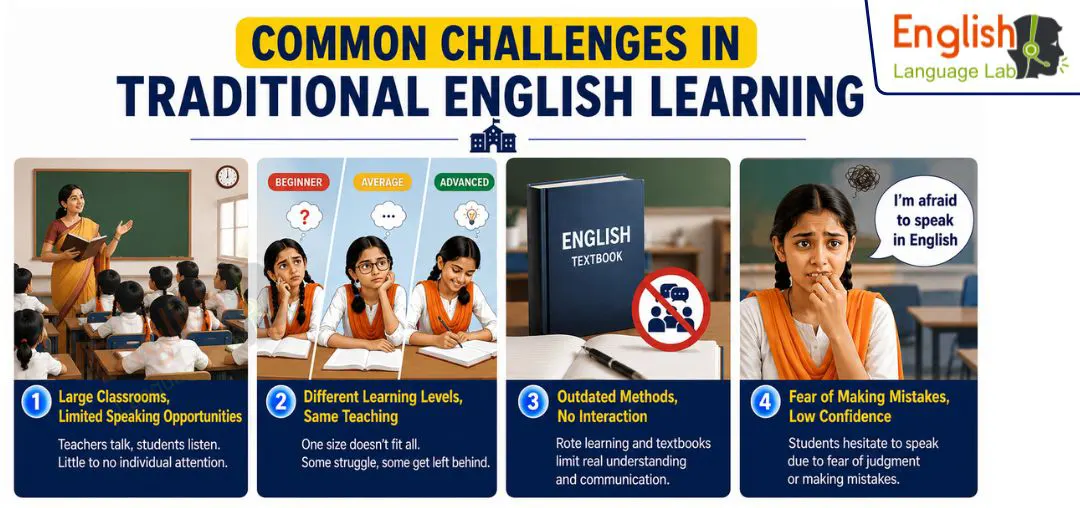
Educational institutions in different parts of India do everything to improve their academic standards, but practical English communication skills is an area that has not been addressed much as most students pass their written assessments successfully knowing little about speaking English confidently outside of their classrooms.
Some of the most common challenges include:
1. Limited Speaking Opportunities
Traditional classroom environments often have time constraints. Teachers must complete the syllabus while managing large classrooms, leaving limited opportunities for every student to practice speaking individually. As a result, students may understand grammar and vocabulary but lack confidence in verbal communication.
2. Uneven Language Proficiency
Every classroom includes students with different learning abilities. Some students communicate comfortably in English, while others may still be building their confidence.
This English lab software allows learners to progress through structured activities while receiving repeated exposure to English in an engaging format.
3. Lack of Interactive Learning
Many English lessons continue to rely primarily on textbooks and blackboard instruction. Although these methods remain valuable but today's students also benefit from multimedia learning that combines:
- Audio
- Visual content
- Interactive exercises
- Practical communication activities
- Listening practice
- Pronunciation exercises
These approaches help sustain attention and encourage active participation.
4. Pronunciation Difficulties
Without structured listening exercises and guided pronunciation practice, students may develop incorrect speaking habits that become difficult to correct later.
Interactive audio resources help expose learners to standard pronunciation, stress patterns and natural English speech.
Why Little Flower English High School Choose our software:
Recognizing the growing importance of English communication, they have sought a solution that would complement classroom teaching with structured language practice. The objective was to provide an environment where students could actively engage with English through guided digital learning.
Key considerations included:
1. Dedicated English learning software
2. Interactive multimedia lessons
3. Complete LSRW skill development
4. Grammar and vocabulary reinforcement
5. Pronunciation and phonetics practice
6. Teacher friendly interface
7. Structured learning modules
8. Completely offline software ⭐⭐⭐
How This Software Supports LSRW Development:
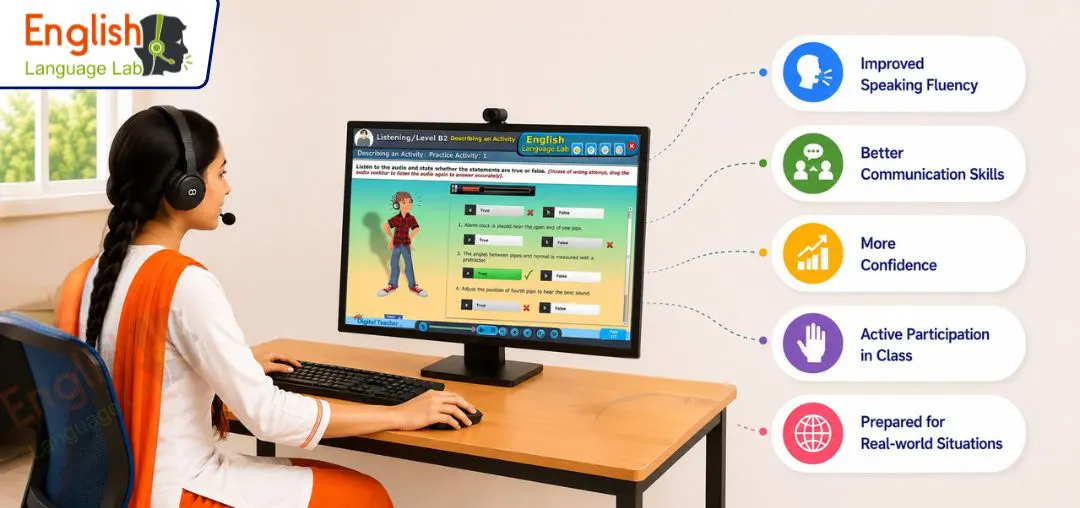
The foundation of effective language learning lies in mastering the four core language skills:
- Listening
- Speaking
- Reading
- Writing
Together, these are known as LSRW Skills and they form the basis of modern English language education.
This language lab software provides structured activities that support each of these competencies:
Listening Skills:
Students are exposed to carefully designed audio content that helps them become familiar with pronunciation, intonation, rhythm, and natural spoken English. Regular listening activities encourage learners to understand spoken language more effectively while preparing them for meaningful communication.
Speaking Skills:
Our english lab software provides students with opportunities to participate in guided speaking activities designed to improve confidence and communication. By practicing regularly, students become more comfortable expressing ideas in English during classroom discussions, presentations and everyday interactions.
Reading Skills:
Interactive reading exercises encourage students to develop reading fluency while improving comprehension and vocabulary. Students engage with carefully structured passages that help strengthen language understanding and encourage independent reading habits.
Writing Skills:
Writing activities reinforce grammar, vocabulary, sentence formation, and written communication. By combining reading with writing practice, students gradually improve their ability to organize and express ideas effectively.
Why Speaking Skills Receive Special Attention:
Among all language skills, speaking is often the area where students require the most encouragement. Many learners understand English well but hesitate to communicate due to fear of making mistakes or lack of regular practice.
Our Digital Teacher English Language Lab helps achieve this objective by making learners utilize English interactively in an organized manner, generating a classroom culture where communication is integrated into the learning process rather than being reserved for specific occasions.
Grammar, Vocabulary and Pronunciation:
Strong communication depends on more than speaking alone. This software integrates these elements into its learning modules, allowing students to strengthen their overall language foundation while simultaneously improving communication skills.
- Correct grammar
- Rich vocabulary
- Accurate pronunciation
- Clear sentence construction
- Appropriate word usage
Rather than teaching these concepts in isolation, our English lab software connects grammar, vocabulary, listening and speaking to create a more meaningful learning experience.
Benefits for Students:
Although every learner progresses differently, a structured english learning provides students with consistent opportunities to improve essential language skills.
Increased Confidence:
Regular exposure to English through listening and speaking activities helps many students become more comfortable communicating in English during classroom discussions and presentations.
Better Listening Skills:
Interactive audio lessons expose students to clear pronunciation and natural spoken English, encouraging attentive listening and improved comprehension.
Improved Speaking Practice:
Dedicated speaking activities provide students with regular opportunities to practice verbal communication in a supportive learning environment. Rather than waiting for occasional classroom interactions, students receive structured opportunities to use English more frequently.
Benefits for Teachers:
This language lab software is designed to support teachers as much as it supports students. Instead of spending significant time preparing additional language practice materials, teachers can utilize structured digital resources that align with classroom objectives.
The software enables teachers to:
- Conduct organized English language sessions
- Integrate multimedia learning into lessons
- Encourage greater student participation
- Reinforce classroom concepts through practical exercises
- Provide structured listening and speaking activities
- Maintain consistency across different batches of students
Benefits for School Management:
Educational institutions continuously seek solutions that improve learning outcomes while supporting teachers and students. A dedicated language lab software contributes to this objective by providing a specialized learning environment focused on communication skills.
Enhanced Academic Infrastructure:
A dedicated english lab software becomes an important academic resource that supports language education across multiple classes.
Long Term Educational Investment:
Because the software can be integrated into regular english teaching activities year after year, it becomes a valuable component of the school's academic infrastructure.
|
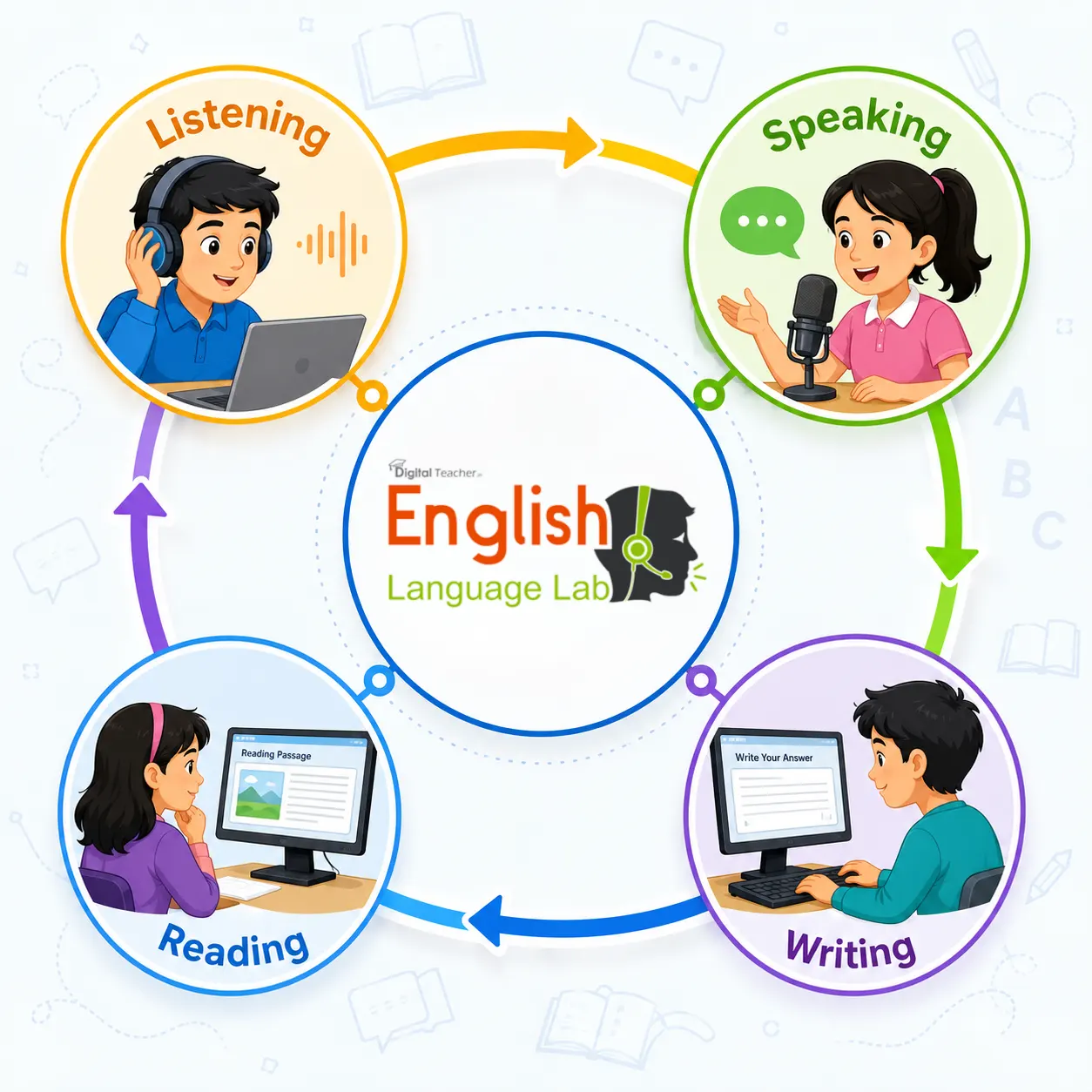
See the Case Study in Action: Reading about the implementation is one thing but watching the English Language Lab in action is even better. Watch the short video below to get a glimpse of how students engage with the Digital Teacher English Language Lab in a practical learning environment. Click here - www.youtube.com/shorts/WjNgIQ3239w |
Traditional English Teaching vs Digital English Language Lab
Traditional classroom teaching and digital language learning are not competing approaches they complement each other.
|
Traditional Classroom |
Digital Teacher English Language Lab |
|
Textbook based learning |
Interactive multimedia learning |
|
Limited speaking opportunities |
Structured speaking activities |
|
Teacher led explanation |
Teacher-guided interactive practice |
|
Blackboard instruction |
Audio-visual learning modules |
|
Limited pronunciation practice |
Dedicated pronunciation exercises |
|
Vocabulary through memorization |
Vocabulary through interactive activities |
|
General classroom discussions |
Individual and group communication practice |
|
Theory focused |
Practical language application |
A Partnership Built on Continued Confidence:
One of the strongest indicators of any educational solution is whether institutions continue using it over time. Little Flower English High School has been using the Digital Teacher English Language Lab Software for multiple academic years and continues to renew the software annually. This ongoing relationship reflects the school's confidence in the software and its suitability for supporting English language learning.
Why More Schools Are Investing in English Language Labs:
Across India, schools are increasingly recognizing that English proficiency extends beyond examination performance. Parents, educators, employers place growing importance on communication skills, confidence, softskills and practical language usage.
As educational practices continue to evolve, dedicated English Language Labs are becoming valuable additions to school infrastructure because they help create opportunities for students to practice English regularly in a structured environment.
Schools implementing digital language learning solutions are investing not only in technology but also in creating engaging learning experiences that support long-term language development.
Why Schools Trust Digital Teacher English Language Lab?
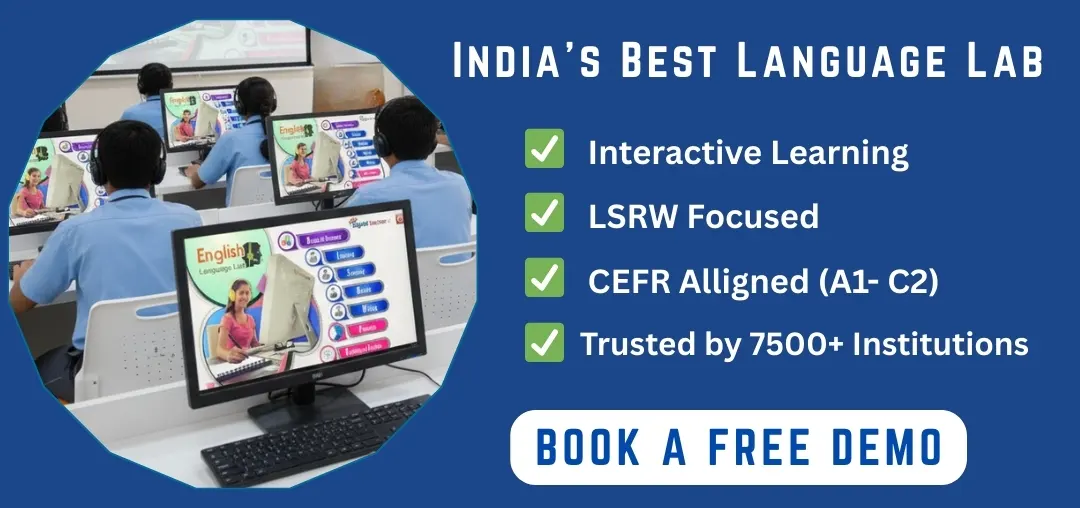
Schools and colleges are no longer looking for software that simply delivers digital lessons they seek a solution that supports teachers, engages students and integrates seamlessly into the existing curriculum.
This is where the Digital Teacher English Language Lab stands out by combining technology with a structured approach to English language learning. Rather than replacing conventional teaching methods, this software enhances students by giving them additional opportunities to practice English in meaningful and engaging ways.
One of the key reasons educational institutions choose the Digital Teacher English Language Lab is its emphasis on practical communication. While grammar and vocabulary remain essential components of language learning, true proficiency comes from regular listening, speaking, reading and writing practice.
The software encourages students to actively participate in these activities, helping them build confidence and improve their ability to communicate effectively in real life situations.
Request a personalized demo today to explore how Digital Teacher English Language Lab can support your English learning objectives and create engaging experiences for your students.
Learn More or Request a Demo
Discover How English Language Lab Builds Real Communication Skills
Website: www.englishlab.co.in
Email: sales@codeandpixels.net
Phone: +91 90000 90702
 |
RAHUL He architected the reporting frameworks that allow HODs and Principals to benchmark student performance against global standards. By identifying "error clusters" and performance trends through data science, he helps institutions optimize their teaching strategies and ensure a high standard of academic excellence.    |
______________________________________________________________________________________________
Frequently Asked Questions (FAQs)
1. Is an English Language Lab suitable for CBSE, ICSE and State Board schools?
Yes. English language lab software can support schools across CBSE, ICSE, State Board and other curriculum. Since communication skills are essential regardless of the board, schools can integrate language lab sessions into their existing English teaching classes.
2. Can an English Language Lab benefit students at different proficiency levels?
Yes. Students enter classrooms with different levels of English proficiency. A well designed language lab allows learners to reinforce concepts through repeated practice, making it beneficial for beginners as well as students who want to further improve their communication skills.
3. Why are schools increasingly investing in Language Labs?
Schools recognize that English communication skills play an important role in higher education, competitive examinations, interviews and future careers. Language Labs provide an interactive environment where students can regularly practice language skills, supporting both academic learning and practical communication.
4. How often should students use an English Language Lab?
Many institutions schedule one or two dedicated language lab sessions each week, depending on their timetable and learning objectives. Regular practice helps students consistently strengthen their Listening, Speaking, Reading and Writing skills over time.
5. Does an English Language Lab replace English teachers?
No. English Language Labs are designed to support teachers, not replace them. Teachers continue to guide classroom instruction, while the software provides additional interactive learning resources that reinforce concepts taught during lessons.
6. Why do many schools renew their English Language Lab software every year?
Schools often continue using and renewing English Language Lab software because it remains integrated into their teaching process, supports ongoing language development and provides consistent digital learning resources for students and teachers.


